Nearly Two Dozen Rattlesnakes Found Under an Aledo Home: What Every Westoplex Homeowner Should Know

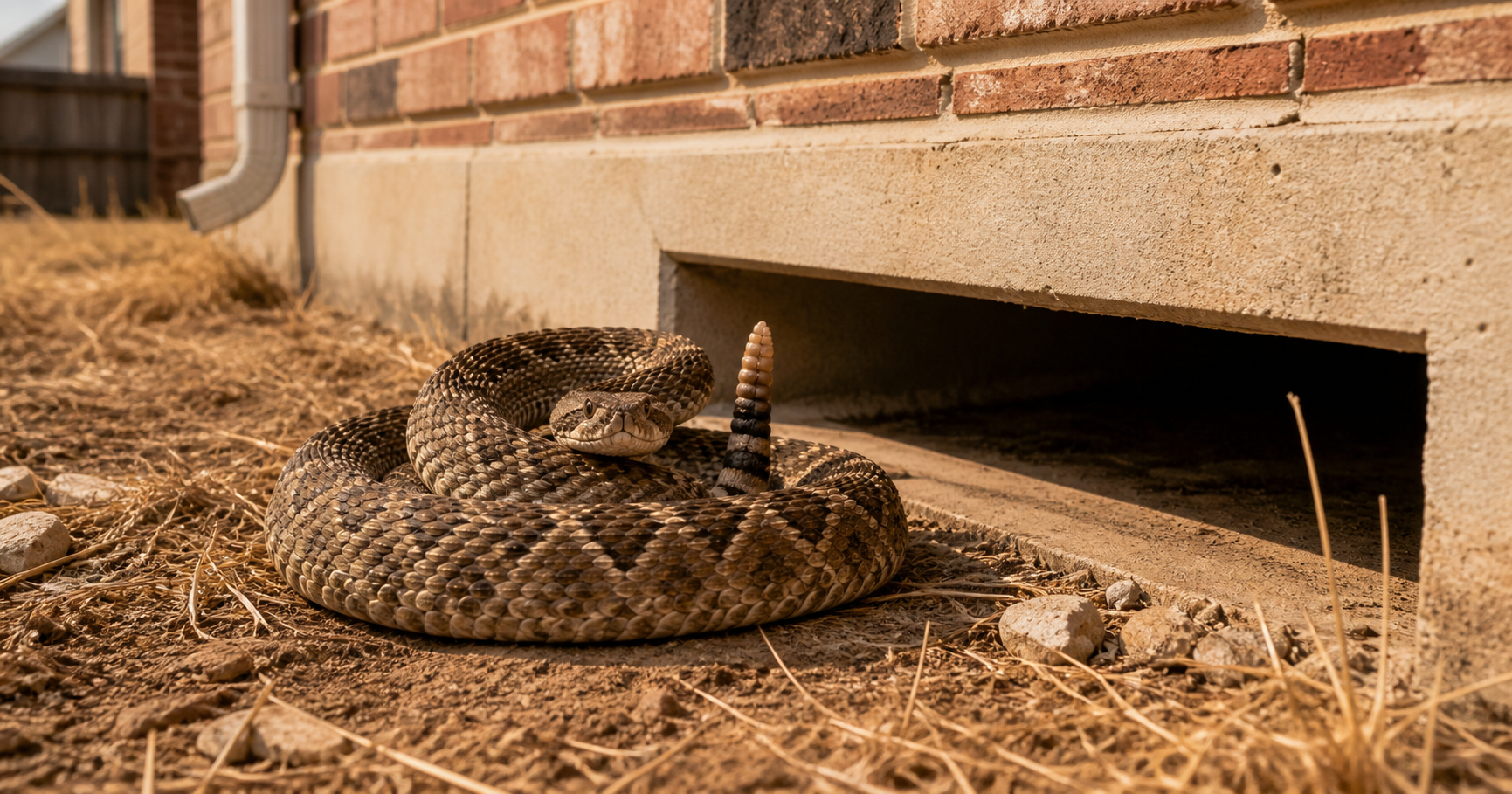
A wildlife crew called out to check on "something under someone's house" in Aledo this month ended up pulling nearly two dozen rattlesnakes out of the crawl space. That is not a typo. TWO DOZEN.
According to homeowner Randall Kennedy, Dallas Fort Worth Wildlife Control collected nearly two dozen rattlesnakes from beneath his Aledo home (Spillyards, 2026). Sheila Taber, the snake wrangler who responded, said it started as a routine call before she realized she'd found "a whole den". Her words: "They just kept coming out." nbcdfwnbcdfw
Kennedy told NBC 5 that rattlesnake sightings are especially common in Aledo, describing crews responding to calls "three times a day" (Spillyards, 2026). That specific number comes from one wildlife removal operator, not a county health department or a wildlife agency, so treat it as an anecdote and not a stat you can build a decision around. nbcdfw
Here's what makes this story more than just a fun scare. Kennedy said the snakes were drawn to the crawl space because it sat near an AC line, staying cool while it was scorching outside, and because rats and rabbits were already living down there (Spillyards, 2026). Shade, cool air, and a free buffet. That is not a rattlesnake problem. That is a rodent and access problem that happened to attract rattlesnakes. nbcdfw
Why Aledo, Specifically
This part surprised me and it might surprise you too. Western diamondback rattlesnakes are usually thought of as a Hill Country or West Texas snake. But Greg Pandelis, collections manager at UT Arlington's Amphibian and Reptile Diversity Research Center, said diamondbacks in the Dallas-Fort Worth area already live in certain pockets, including Dallas and Tarrant counties. He noted the species is at the outer edge of its range here and needs more than just urban land to survive, meaning a documented sighting usually points to an established local population rather than a snake that wandered in from somewhere else (Union-Bulletin, 2026). Union-BulletinUnion-Bulletin
Translate that: Aledo and the rest of Parker County sit right in the transition zone between the Fort Worth metro and true ranch country. That mix of open land, rock, and brush is exactly the kind of habitat a western diamondback wants.
Texas Is Basically Australia, and I Say That With Love
I've joked with clients for years that Texas is the Australia of the western hemisphere. Everything here can hurt you a little, and most of it will leave you alone if you leave it alone. Fire ants, scorpions, the occasional feral hog, and yes, rattlesnakes. It's part of the deal when you choose land over a postage-stamp yard. That's my opinion as a guy who has spent a lot of time on Texas ranch land, not a scientific claim, but I stand by it.
How to Keep Snakes From Wanting Your Property
The good news is that snakes are lazy. They go where the living is easy. Texas A&M AgriLife Extension wildlife researchers say no chemical repellant has actually been proven to keep snakes away, but simple yard maintenance makes a property far less inviting (Texas A&M AgriLife Extension, 2026). Their recommendations, translated into plain English: AgriLife Today
- Keep the grass short. Tall grass hides both snakes and the rodents snakes hunt.
- Clear woodpiles, brush piles, and junk. Removing woodpiles, debris, and clutter takes away places for snakes to hide (Texas A&M AgriLife Extension, 2026). The Gilmer Mirror
- Control your rodent population. No mice and rats means no reason for a snake to stick around.
- Seal up crawl space and foundation gaps. The Aledo case started with a crawl space that offered shade, cool air, and food. Close that gap and you remove the invitation.
- Watch pets at night. Keeping pets on a leash reduces the chance of an unexpected encounter (Texas A&M AgriLife Extension, 2026). tamu
None of this guarantees a snake-free yard. Nothing does. But it takes away the reasons a snake would want to stay.
If You Find a Rattlesnake at Your House
Step one, according to the NBC 5 story: take a photo from a safe distance and send it to Dallas Fort Worth Wildlife Control for free identification, which helps determine whether the snake is even venomous before anyone panics (Spillyards, 2026). nbcdfw
Beyond that, AgriLife's herpetologist keeps it simple. If you spot a snake, the best move is to leave it alone and walk away if you can (Texas A&M AgriLife Extension, 2026). Do not try to kill it or catch it. Most bites happen when people try to move, trap, or mess with a snake, not when they simply avoid it. EastTexasRadio.com
My rule growing up on family ranches here in Texas: look before you step, look before you reach into brush or under anything low, and remember the snake is more scared of you than you are of it. It doesn't want a confrontation any more than you do. It just wants to be left alone in whatever cool, shady spot it found.
If a Rattlesnake Bites You or Your Pet
This is the one section where you don't have time to Google around, so here it is straight from the medical experts.
Mayo Clinic's guidance: call 911 immediately, do not wait for symptoms, move away from the snake, stay still and calm, remove jewelry or tight clothing before swelling starts, wash the bite with soap and water, cover it loosely with a clean dry bandage, and keep the affected limb at roughly heart level (Mayo Clinic Staff, 2026). Mayo Clinic
Just as important is what not to do. Don't cut the bite, don't try to suck out venom, don't apply ice, and don't take aspirin, ibuprofen, or naproxen, since those can increase bleeding risk (Mayo Clinic Staff, 2026). Acetaminophen is fine for pain if you need it. Mayo Clinic
The odds are better than most people assume. The CDC estimates 7,000 to 8,000 people are bitten by venomous snakes in the U.S. each year, and about five of those bites are fatal (CDC, 2026). That's a small number nationally, but the bite can still cause lasting damage, so don't treat it casually. Get to a hospital. CDC
There's also a vaccine you can get for your dogs that helps them better survive rattlesnake bites. When I was a staff writer at the Glen Rose Reporter one of my beats was interviewing the local veterinarians for general tips & ticks of local pet care. Dr Mike Jones, one week, told me about this rattlesnake vaccine that is saving dog's lives. I tried to find that story to link here, but that was written over 10 years ago and I can't find it. If you can find that story - email me! I'd love to have access to my old work.
Country Living Is Worth the Trade-Off
Here's my actual take. People move out to Aledo, Weatherford, and the western edge of Parker County because they want space. A bigger lot. A view that isn't a neighbor's fence. Room for kids, dogs, horses, or just quiet.
That space comes with wildlife. Snakes, coyotes, the occasional bobcat sighting. It's part of the same package as the sunsets and the stars you can actually see out here.
"Watch out for snakes, be back before sundown." That was my momma's catchphrase every time I ran out the door as a kid. It wasn't a warning meant to scare us off the land. It was just Saturday at the ranch. Growing up running around family ranches here in Texas, snakes were part of the deal, the same way fence lines and cattle guards were part of the deal. You learn to watch where you step and you keep going.
Here's the thing people forget when they see a headline like "two dozen rattlesnakes." Snakes aren't a problem to be eliminated. They're actually a really important part of our native Texas ecosystem. They keep the rat and rabbit population in check, which is exactly what was happening under that Aledo crawl space before anyone found the den. No snakes means a lot more rodents, and rodents cause their own kind of damage to a home. You take the beauty with the creepy-crawly. That's the deal, and in my opinion, it's a good one.
What This Means If You're House Hunting in the Westoplex
If you're a Move-Up Buyer looking at larger lots in Walsh Ranch or Morning Star in Aledo, or considering acreage-style living near Bear Creek, this story is a good reminder to ask about the property's brush clearing, foundation sealing, and crawl space condition during a showing, not just square footage and finishes. New construction communities out here typically clear and grade lots as part of the build process, which tends to reduce existing brush piles and rock cover on day one. That's a nice starting point, but it doesn't mean maintenance stops after closing. Resale homes on larger lots can be just as snake-safe with the right upkeep. It comes down to ongoing yard care either way, not just which one you buy.
For Empty-Nesters eyeing lower-maintenance living in communities like Westpark or Timbercreek in Benbrook, or Westover Village in Weatherford, this is actually one more point in favor of a smaller, well-maintained lot. Less brush, less woodpile, less crawl space to worry about. If snake anxiety is part of why you're downsizing, that's a completely fair thing to bring up with me when we're touring homes.
Either way, if you're touring a home in this part of the Westoplex, it's worth asking your agent, the seller, or the builder about pest and wildlife history. It's a normal question out here, not an alarming one.
One Snake That Still Gets Me
I'll be honest about something. Rattlesnakes don't rattle me much. I've stepped over more than a handful in my life.
Ha! One time I was showing a ranch outside of Stephenville in 2022, and my clients and I were checking out the well-house. It was a small structure and there were four of us in there. NONE of us saw the rattlesnake curled up around the wellpump in the middle of the room. I think every heart in that tiny, hot room stopped for a second - even the snakes! The snake was justified because we caught that sumb and the old man that owned the ranch at the time (my clients bought te ranch and are still loving it) killed that snake with a T-post. One of my favorite showing stories.
 June 24, 2022 - just outside Stephenville. The old man that owned the ranch is in the sandals - dude was the real deal. IYKYK. I took this photo. Water moccasins, also called cottonmouths, are a different story. I've had enough close encounters with them over the years that they're the one snake that actually gets my heart rate up.
Part of it is timing. During their breeding season, in my experience they don't back off the way I expect a snake to. Male cottonmouths do get more aggressive with each other during mating season, since they compete for females (A-Z Animals, 2026), and in my own experience that same time of year is when they seem a lot less interested in getting out of my way. That's a personal read based on years around creeks and stock tanks, not a claim that the species is aggressive toward people in general. Herpetologists actually disagree on that point, and some research suggests cottonmouths get an unfair reputation. But you won't catch me testing that theory near a pond in April. A-Z Animals
Also, and I'll admit this is off-topic but I'm curious: I've heard rattlesnake meat tastes something like chicken, but greasier. I have not personally tried it. If any of you have, reply and tell me if that's accurate.
5. Sources
Centers for Disease Control and Prevention. (2026, March 3). Venomous snakes at work. NIOSH. https://www.cdc.gov/niosh/outdoor-workers/about/venomous-snakes.html
Mayo Clinic Staff. (2026, July 12). Snakebites: First aid. Mayo Clinic. https://www.mayoclinic.org/first-aid/first-aid-snake-bites/basics/art-20056681
Spillyards, A. (2026, August 7). 'They just kept coming out': Rattlesnake den found under Aledo home. NBC 5 Dallas-Fort Worth. https://www.nbcdfw.com/news/local/they-just-kept-coming-out-rattlesnake-den-found-under-aledo-home/4059934/
Texas A&M AgriLife Extension. (2026, March 16). Five ways to prevent negative encounters with snakes this spring. AgriLife Today. https://agrilifetoday.tamu.edu/2026/03/16/five-ways-to-prevent-negative-encounters-with-snakes-this-spring/
Union-Bulletin. (2026, January 15). What to know about venomous snakes in North Texas after recent diamondback discovery. https://www.union-bulletin.com/news/national/what-to-know-about-venomous-snakes-in-north-texas-after-recent-diamondback-discovery/article_ca185c9a-3f91-5dbe-931a-90409f1358cf.html
A-Z Animals. (2026, March 2). The one dead-simple way to tell a cottonmouth from a harmless water snake. https://a-z-animals.com/blog/the-one-dead-simple-way-to-tell-a-cottonmouth-from-a-harmless-water-snake/
[Click here to sell your home!]
[Click here to buy your home!]
[Click here to go back to Westoplex Harville]